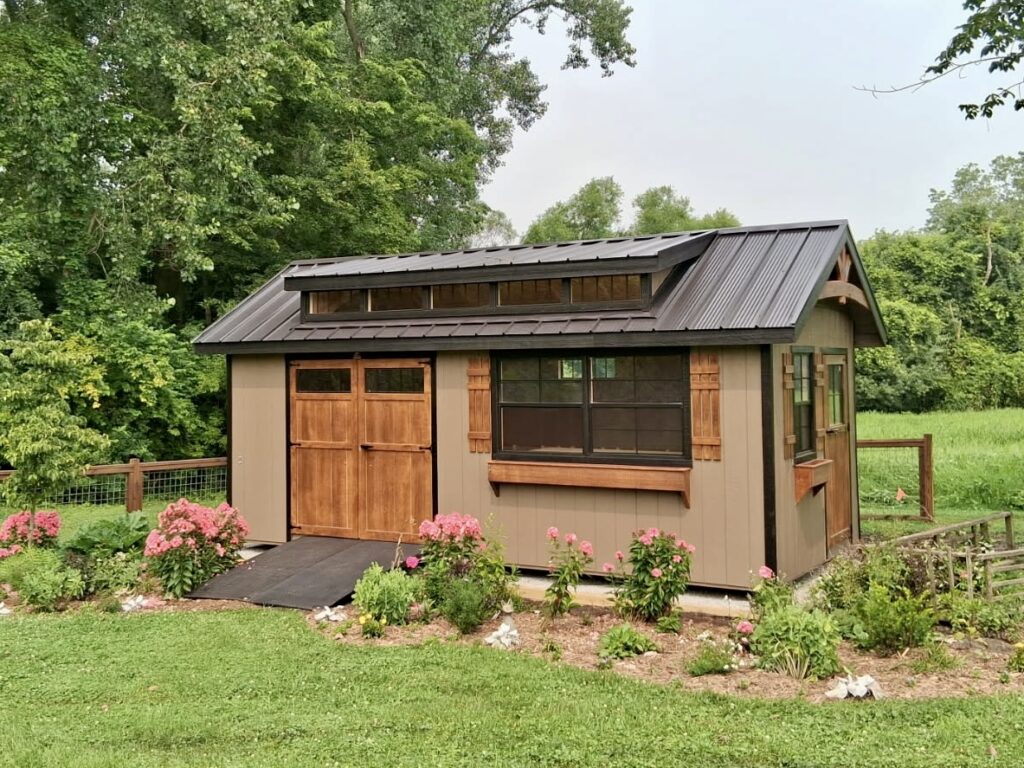
Walk into a shed on a hot July afternoon and it can feel like stepping into an oven.
Whether you’re storing lawn equipment, building furniture in a workshop, or turning your shed into a backyard office, excessive heat can make the space uncomfortable and even damage what’s inside.
The good news? Keeping your shed cooler doesn’t require a complete remodel. With the right ventilation, building design, and a few smart upgrades, you can dramatically reduce heat buildup and create a space that’s much more enjoyable all summer long.
Let’s look at the best ways to keep your shed cool when temperatures start climbing.
1. Improve Ventilation First
If there’s one upgrade that makes the biggest difference, it’s ventilation.
Hot air naturally rises. Without a way for that heat to escape, it becomes trapped near the roof and slowly turns your shed into a giant heat box.
Adding roof vents, gable vents, ridge vents, or additional airflow openings allows hot air to leave the building while drawing cooler air inside.
For customers designing a new shed through Sunrise Structures’ 3D Builder, ventilation is one of the smartest upgrades to consider from the start.
2. Add More Windows
Windows aren’t just for natural light.
When positioned on opposite sides of a building, they create cross-ventilation that helps move hot air out and fresh air in.
This is especially useful if you’re using your shed as:
- A workshop
- A hobby space
- A home office
- A gardening shed
Many Sunrise Structures shed styles can be customized with additional windows, making it easier to create a brighter and cooler interior.
3. Choose a Lighter Roof Color
Your roof takes the brunt of the summer sun.
Dark colors absorb heat while lighter colors reflect more sunlight away from the building.
If you’re planning a custom shed, choosing a lighter roofing color can help reduce interior temperatures throughout the day.
It’s a simple decision that can have a noticeable impact over time.
4. Consider a Lofted Shed Design
Not all sheds handle heat the same way.
Buildings with higher ceilings and lofted rooflines naturally allow heat to rise above the main working area.
A lofted barn or lofted garden shed often feels more comfortable simply because there’s more air volume inside the structure.
As a bonus, you gain valuable overhead storage space.
5. Add Insulation if You Spend Time Inside
If you’re only storing rakes and lawn equipment, insulation may not be necessary.
But if your shed functions as a:
- Home office
- Studio
- Workshop
- Hobby room
- Backyard retreat
Insulation can make a huge difference.
Proper insulation slows heat transfer through the walls and roof, helping maintain a more comfortable temperature throughout the day.
This is especially popular among customers purchasing cabins and studio-style buildings.
6. Create Shade Around Your Shed
One of the easiest cooling solutions doesn’t involve the shed at all.
Trees, landscaping, and strategic placement can dramatically reduce the amount of direct sunlight hitting the building.
Even partial afternoon shade can help lower interior temperatures and reduce the workload on fans or air conditioning units.
Starting with proper site preparation and thoughtful shed placement and installation can also help reduce heat buildup, making it easier to keep your building comfortable throughout the summer, which is why Sunrise Structures provides guidance on both shed site preparation and installation before your building arrives.
7. Use Fans to Keep Air Moving
Air movement makes a space feel significantly cooler.
A simple box fan, wall-mounted fan, or ceiling fan can help circulate air and eliminate hot spots inside the building.
When combined with proper ventilation, fans become even more effective.
8. Upgrade to a Mini Split System
For homeowners using their shed as a dedicated workspace, mini split systems are becoming increasingly popular.
They’re:
- Energy efficient
- Quiet
- Effective in both summer and winter
If you’re creating a year-round backyard office or hobby room, a mini split can transform the space into a comfortable extension of your home.
9. Keep Heat-Producing Equipment to a Minimum
Some sheds get hotter because of what’s stored inside them.
Equipment such as:
- Riding mowers
- Lawn tractors
- Power equipment
- Compressors
can release additional heat into an already warm environment.
Whenever possible, allow engines to cool before storing them inside the shed.
10. Design for Comfort From Day One
The easiest way to keep a shed cool is to plan for it before construction begins.
Choosing the right size, roof style, window layout, ventilation package, and building orientation can help prevent heat problems before they start.
That’s one reason many homeowners use Sunrise Structures online 3D Builder to customize their shed around how they’ll actually use it.
Whether you’re creating a storage shed, workshop, portable garage, cabin, or backyard office, building with comfort in mind pays off for years to come.
Keep Your Shed Comfortable All Summer Long
A cooler shed starts with smart design choices.
Ventilation, windows, insulation, shade, and thoughtful building layouts can all work together to make your shed far more comfortable during the summer months.
If you’re planning a new shed, garage, cabin, or workshop and want a building designed around your needs, Sunrise Structures can help. With customizable designs, quality craftsmanship, and delivery throughout Indiana, Michigan, Illinois, and Ohio, it’s easy to create a building that’s ready for whatever summer brings.